
Embarking on a journey to alleviate anxiety and stress naturally opens up a world of possibilities. From lifestyle changes to herbal remedies and relaxation techniques, this comprehensive guide dives into effective ways to find inner peace and calm amidst life's challenges.
Delve deeper into the realms of managing anxiety and stress with insightful tips and strategies that prioritize your well-being and mental health.
Understanding Anxiety and Stress
Anxiety and stress are common emotional responses to various challenges and uncertainties in life. Anxiety is characterized by feelings of worry, fear, and unease, often accompanied by physical symptoms like increased heart rate and sweating. On the other hand, stress is the body's reaction to a situation that requires a response, triggering the "fight or flight" response.
Impact of Anxiety and Stress on Mental Health
Anxiety and stress can have a significant impact on mental health, leading to conditions like depression, panic disorders, and chronic stress. Prolonged exposure to these conditions can impair cognitive function, affect decision-making abilities, and disrupt overall well-being. It is important to address these issues promptly to prevent further complications.
Importance of Managing Anxiety and Stress Naturally
Managing anxiety and stress naturally is crucial for maintaining mental health and overall well-being. Natural remedies like mindfulness meditation, exercise, adequate sleep, and healthy eating habits can help reduce symptoms of anxiety and stress without the side effects often associated with medications.
These approaches promote long-term resilience and coping mechanisms, enabling individuals to better manage stressors in their daily lives.
Lifestyle Changes
Making certain lifestyle changes can greatly help in reducing anxiety and stress. These changes can have a positive impact on both mental and physical well-being.
Role of Exercise in Managing Anxiety and Stress
Regular exercise plays a crucial role in managing anxiety and stress. Physical activity helps in releasing endorphins, also known as "feel-good" hormones, which can improve mood and reduce stress levels. Exercise can also act as a distraction, allowing individuals to focus on the physical activity rather than their worries.
It promotes better sleep, boosts self-esteem, and enhances overall well-being.
Significance of a Healthy Diet in Alleviating Anxiety and Stress
Maintaining a healthy diet is essential in alleviating anxiety and stress. Certain foods can impact mood and energy levels. Consuming a well-balanced diet rich in fruits, vegetables, whole grains, and lean proteins can provide essential nutrients that support mental health.
Avoiding excessive caffeine, sugar, and processed foods is also recommended as they can contribute to increased anxiety and stress levels.
Herbal Remedies
Herbal remedies have been used for centuries to help manage anxiety and stress naturally. These remedies can be a gentle and effective way to promote relaxation and calmness in the body and mind.
Herbal Teas for Anxiety
Herbal teas such as chamomile, peppermint, and lemon balm are known for their calming properties. These teas contain compounds that can help reduce stress and anxiety levels. Drinking a warm cup of herbal tea can be a soothing ritual to incorporate into your daily routine.
- Chamomile tea: Chamomile is a popular herb known for its calming effects. It helps reduce anxiety and promotes better sleep.
- Peppermint tea: Peppermint has a refreshing and cooling effect that can help relax the muscles and ease tension.
- Lemon balm tea: Lemon balm is a member of the mint family and is used to reduce stress and anxiety by promoting a sense of calm.
Essential Oils for Stress Relief
Lavender and chamomile essential oils are commonly used for their stress-relieving properties. These oils can be inhaled through aromatherapy or applied topically to help calm the mind and body.
-
Lavender essential oil: Lavender is known for its relaxing and sedative effects. It can help reduce anxiety and improve sleep quality.
-
Chamomile essential oil: Chamomile has anti-inflammatory and calming properties that can help reduce stress and promote relaxation.
Relaxation Techniques
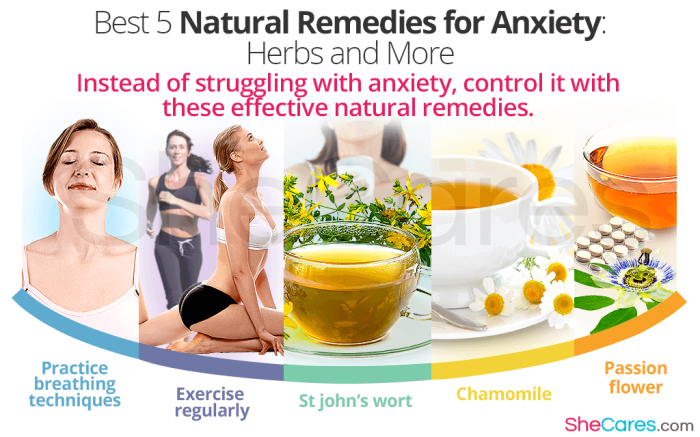
Meditation, deep breathing exercises, and progressive muscle relaxation are effective techniques for managing anxiety and stress. These practices can help calm the mind and body, promoting a sense of relaxation and well-being.
Meditation for Anxiety and Stress Reduction
Meditation involves focusing the mind on a particular object, thought, or activity to achieve mental clarity and emotional calmness. By practicing meditation regularly, individuals can reduce stress, anxiety, and improve overall mental health. Research has shown that meditation can lower levels of cortisol, the stress hormone, and increase feelings of relaxation and inner peace.
It can also enhance self-awareness and promote a positive outlook on life.
Deep Breathing Exercises for Stress Management
Deep breathing exercises involve taking slow, deep breaths to activate the body's relaxation response. By focusing on the breath and slowing down the breathing rate, individuals can reduce feelings of anxiety and stress. Deep breathing can increase oxygen flow to the brain, which can help improve concentration and promote a sense of calmness
Practicing deep breathing exercises for a few minutes each day can have a significant impact on reducing stress levels and promoting overall well-being.
Progressive Muscle Relaxation for Anxiety Relief
Progressive muscle relaxation is a technique that involves tensing and then relaxing different muscle groups in the body. By systematically tensing and releasing muscle groups, individuals can reduce physical tension and promote relaxation. This practice can help alleviate symptoms of anxiety, such as muscle stiffness and tension headaches.
Progressive muscle relaxation can also improve sleep quality and overall physical comfort, leading to a greater sense of relaxation and well-being.
Mind-Body Practices
Yoga, mindfulness practices, and Tai Chi are all effective mind-body practices that can help in managing anxiety and stress by promoting relaxation and improving overall well-being.
Yoga for Relaxation and Stress Reduction
Yoga is a holistic practice that combines physical postures, breathing exercises, and meditation to promote relaxation and reduce stress. By focusing on the breath and being present in the moment, yoga helps calm the mind and body, leading to a sense of peace and tranquility.
- Yoga postures, or asanas, help release tension in the body and improve flexibility.
- Pranayama, or breathing exercises, can help regulate the breath and calm the nervous system.
- Meditation in yoga helps in quieting the mind and promoting mindfulness.
Practicing yoga regularly can lead to increased self-awareness, reduced anxiety levels, and improved emotional well-being.
Mindfulness Practices for Alleviating Anxiety Symptoms
Mindfulness practices involve focusing on the present moment without judgment, which can help alleviate anxiety symptoms by reducing rumination and promoting acceptance.
- Mindful breathing exercises can help in grounding oneself during moments of anxiety.
- Body scan meditation can help in releasing physical tension and promoting relaxation.
- Mindful walking or eating can help in cultivating awareness and reducing stress levels.
Engaging in mindfulness practices regularly can lead to improved stress management, enhanced focus, and a greater sense of emotional balance.
Benefits of Tai Chi for Stress Management
Tai Chi is a gentle form of martial arts that involves slow, flowing movements and deep breathing, promoting relaxation and mindfulness.
- Tai Chi movements help in improving balance, flexibility, and strength.
- Deep breathing in Tai Chi helps in reducing stress and anxiety levels.
- The meditative aspect of Tai Chi promotes mental clarity and emotional well-being.
Regular practice of Tai Chi can lead to reduced stress, increased energy levels, and a greater sense of calmness and focus.
Professional Help and Support
Seeking therapy or counseling is crucial in managing anxiety and stress. These professionals can provide strategies, coping mechanisms, and a safe space to explore and address underlying issues contributing to your symptoms.Support groups play a significant role in managing anxiety by providing a sense of community, understanding, and validation.
Connecting with others who are going through similar experiences can reduce feelings of isolation and offer valuable insights and support.
When to Consider Medication
- Medication for anxiety and stress should be considered when symptoms significantly interfere with daily functioning and quality of life.
- Consulting with a healthcare provider is essential to determine the appropriate medication and dosage based on individual needs and circumstances.
- Medication may be used in conjunction with therapy or other treatment methods to achieve the best outcomes.
Wrap-Up
In conclusion, embracing natural remedies for managing anxiety and stress offers a holistic approach towards achieving a balanced and tranquil state of mind. By implementing these practices into your daily routine, you can foster a sense of inner harmony and resilience in the face of adversity.
Questions and Answers
Can herbal remedies interact with medications?
It is possible for herbal remedies to interact with certain medications, so it's crucial to consult with a healthcare provider before incorporating them into your routine.
Is mindfulness effective for managing anxiety?
Yes, mindfulness practices have shown to be effective in reducing anxiety symptoms by promoting present-moment awareness and acceptance.
How often should relaxation techniques be practiced?
Consistent practice of relaxation techniques, such as meditation or deep breathing exercises, daily or as needed, can significantly help in managing anxiety and stress.
Are support groups beneficial for anxiety management?
Support groups can provide a sense of community and understanding that can be beneficial in managing anxiety, allowing individuals to share experiences and coping strategies.
When should medication be considered for anxiety?
Medication for anxiety should be considered when symptoms significantly impact daily functioning and quality of life, following consultation with a healthcare professional.