
Exploring the impact of AI in healthcare for patients, this article delves into the revolutionary advancements that are transforming the patient experience.
Detailing the various ways AI is reshaping the landscape of healthcare, from diagnostics to patient engagement, this discussion sheds light on the future of medicine.
Importance of AI in Healthcare
AI is playing a crucial role in revolutionizing the healthcare industry, particularly in enhancing patient care. By leveraging advanced technologies like machine learning and natural language processing, AI has the potential to significantly improve patient outcomes and experiences.
AI Applications in Improving Patient Care
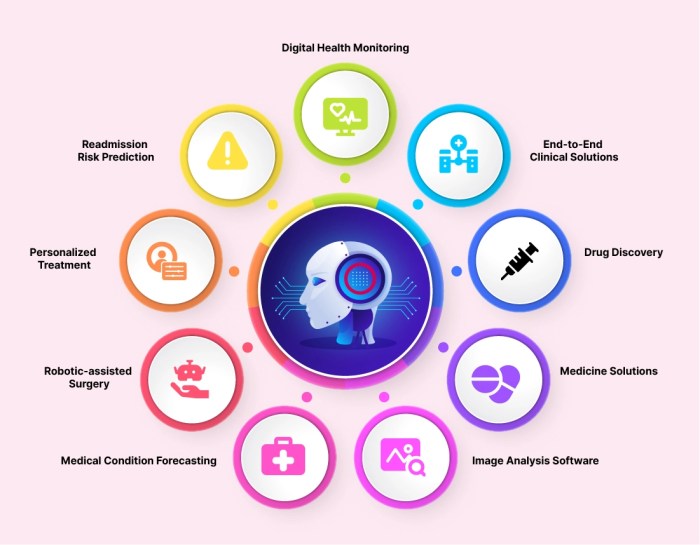
AI is being used in various ways to enhance patient care. For example, AI-powered diagnostic tools can help healthcare providers make more accurate and timely diagnoses, leading to better treatment outcomes. Additionally, AI-driven predictive analytics can identify patients at risk of developing certain conditions, allowing for early intervention and prevention strategies.
- AI-powered imaging analysis: AI algorithms can analyze medical images such as X-rays and MRIs to detect abnormalities or assist radiologists in making more accurate diagnoses.
- Personalized treatment plans: AI can analyze large amounts of patient data to create personalized treatment plans tailored to individual needs and preferences.
- Remote patient monitoring: AI-enabled devices can monitor patients remotely and alert healthcare providers in case of any concerning changes in vital signs or health status.
Impact of AI on Patient Outcomes and Experiences
The integration of AI in healthcare has the potential to greatly improve patient outcomes and experiences. By streamlining processes, reducing errors, and enhancing efficiency, AI can help healthcare providers deliver more personalized and effective care to patients.
AI can help reduce wait times, improve accuracy in diagnoses, and enhance overall patient satisfaction.
- Improved treatment accuracy: AI tools can assist healthcare providers in making more accurate diagnoses and treatment decisions, leading to better outcomes for patients.
- Enhanced patient engagement: AI-powered chatbots and virtual assistants can provide patients with round-the-clock support, answer their questions, and offer personalized health recommendations.
- Efficient resource allocation: AI algorithms can optimize resource allocation in healthcare settings, ensuring that patients receive the care they need in a timely manner.
AI-Powered Diagnostics and Treatment

AI technology plays a crucial role in revolutionizing healthcare by enhancing diagnostics and treatment for patients. Through advanced algorithms and machine learning, AI can provide accurate medical condition assessments and personalized treatment plans, ultimately improving patient outcomes.
AI in Diagnosing Medical Conditions
AI is utilized in diagnosing medical conditions by analyzing vast amounts of patient data, including symptoms, medical history, lab results, and imaging scans. By identifying patterns and correlations in the data, AI algorithms can accurately detect potential diseases or conditions at an early stage.
This early detection leads to timely interventions and improved prognosis for patients.
AI in Personalized Treatment Plans
AI is also instrumental in creating personalized treatment plans for patients based on their unique health profiles. By considering individual factors such as genetics, lifestyle, and treatment responses, AI algorithms can recommend tailored interventions that are most effective for each patient.
This personalized approach helps optimize treatment outcomes and minimize adverse effects.
Role of AI in Predicting Patient Responses
Another critical aspect of AI in healthcare is its ability to predict patient responses to different treatments. By analyzing data from similar cases and treatment outcomes, AI algorithms can forecast how a patient is likely to respond to a specific therapy.
This predictive capability enables healthcare providers to make informed decisions about treatment strategies, leading to better patient care and management.
Enhancing Patient Engagement
AI tools play a crucial role in enhancing patient engagement and communication in healthcare settings
Empowering Patients to Take Control of Their Health
- AI-powered tools can provide personalized health recommendations based on individual data, encouraging patients to make informed decisions about their well-being.
- Through interactive apps and virtual assistants, patients can access real-time information about their health status, medication reminders, and lifestyle recommendations.
- AI algorithms can analyze patient data to predict potential health risks and suggest preventive measures, empowering patients to take proactive steps towards better health outcomes.
Monitoring Patient Progress Remotely
- AI enables remote monitoring of patient progress through wearable devices and sensors, allowing healthcare providers to track vital signs and health metrics in real-time.
- Patients can receive timely feedback and interventions based on AI-generated insights, improving the continuity of care and reducing the need for frequent in-person visits.
- By monitoring patient progress remotely, AI helps in early detection of health issues, prompt interventions, and personalized treatment plans, leading to better outcomes and increased patient satisfaction.
Ethics and Privacy Concerns
In the rapidly evolving landscape of AI in healthcare, it is crucial to address the ethical considerations and privacy concerns that arise with the use of artificial intelligence technologies. Patients, healthcare providers, and policymakers must navigate these complex issues to ensure the responsible and ethical deployment of AI in healthcare.
Ethical Considerations
- AI algorithms may introduce bias: The data used to train AI models can reflect existing biases in healthcare, potentially leading to discriminatory outcomes for certain patient populations.
- Impact on decision-making: There is a concern that reliance on AI recommendations may override human judgment, raising questions about accountability and the role of healthcare professionals in the decision-making process.
- Informed consent: Patients may not fully understand how their data is being used in AI applications, highlighting the importance of transparent communication and obtaining informed consent.
Patient Data Privacy and Security
- Protection of sensitive information: AI systems rely on vast amounts of patient data, making it essential to safeguard personal health information from unauthorized access or misuse.
- Compliance with regulations: Healthcare providers must adhere to data protection regulations such as HIPAA to ensure the privacy and security of patient data in AI applications.
- Data anonymization: Anonymizing patient data before feeding it into AI algorithms can help mitigate privacy risks while still enabling valuable insights to be generated.
Ensuring Transparency and Trust
- Explainability of AI algorithms: Healthcare providers should strive to make AI decision-making processes transparent and understandable to patients, fostering trust in the technology.
- Ethical guidelines and oversight: Establishing clear ethical guidelines and regulatory oversight can help ensure that AI applications in healthcare adhere to ethical standards and protect patient interests.
- Patient engagement and education: Involving patients in discussions about AI use in their care and providing education about how their data is utilized can empower them to make informed decisions and enhance trust in AI technologies.
End of Discussion
In conclusion, AI in healthcare offers a promising future where patients are empowered, treatment is personalized, and outcomes are optimized. As technology continues to evolve, the possibilities for improving patient care are endless.
FAQs
How is AI changing patient care?
AI is revolutionizing patient care by enabling more accurate diagnostics, personalized treatment plans, and improved patient engagement.
What are the ethical concerns surrounding AI in healthcare?
Ethical considerations include patient data privacy, transparency in AI technologies, and ensuring trust in the use of AI for medical purposes.
Can AI predict patient responses to treatments?
AI plays a crucial role in predicting how patients may respond to different treatments, helping healthcare providers tailor interventions for better outcomes.